Secure your software supply chain from build to deployment
Verify every component in your pipeline
Build release assurance on verifiable controls


Protect every stage attackers can target
What is supply chain security in a modern container environment?
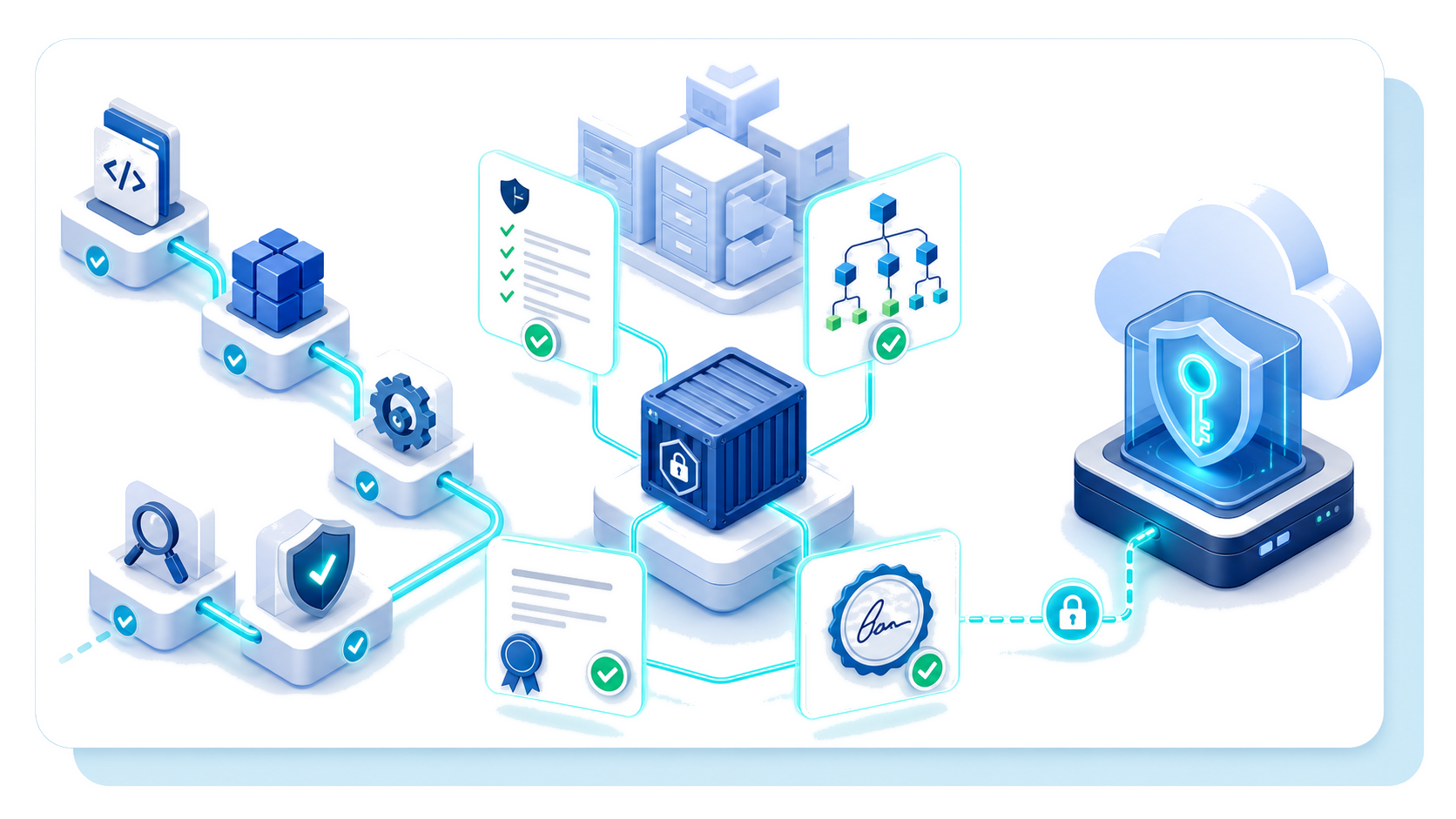
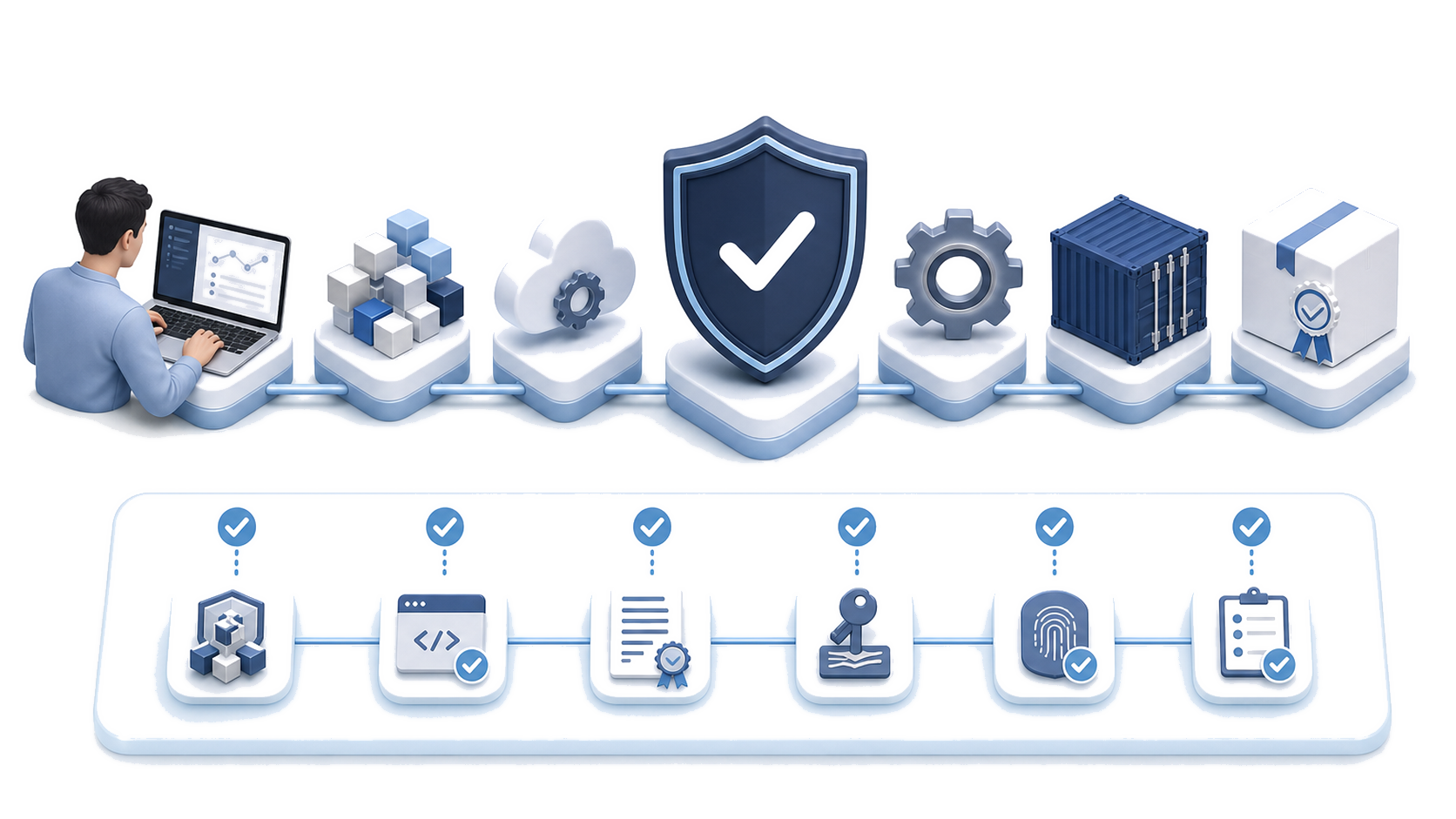
What is supply chain security in a modern container environment? It protects the route from source code and third-party dependencies through build systems, image storage and deployment endpoints. Software supply chain security treats these processes as connected because an attack at one end can weaken every later control.
Source repository protection
A source repository is a clear target. An attacker may steal credentials, alter code, disable a review rule or introduce a dependency that appears legitimate. Controlled download sources, mandatory peer review and protected branches form the first line of defence. Teams should also lock dependency versions and verify checksums, licences and origins rather than accept changing inputs for each build. These checks reduce the risk of importing malicious or unauthorised software from another party.
Build infrastructure attack paths
Build infrastructure presents different attack paths. Compromised runners, exposed secrets or mutable base images can modify an artefact after developers approve its source. Isolate build processes, use short-lived credentials and record exact inputs. This approach supports container image security by making unexpected code changes easier to trace.
Registry-to-cluster controls
The registry-to-cluster route needs independent controls. An attacker might replace an approved image, reuse an old tag or exploit excessive deployment permissions. Least-privilege access restricts what each identity can publish or retrieve. Immutable references connect manifests to precise images, while Kyverno can reject releases that lack trusted evidence or breach security requirements.
Assign ownership across four governance priorities
Trusted code and vendor governance
A named leader should define trusted source and vendor criteria, supported by procurement, engineering and security resources. Use SLSA as guidance for stronger build integrity and provenance without assuming a particular attainment level. Scale reviews to organisation size and software supply chain risk.
Policy enforcement and compliant infrastructure
Security and platform owners should translate compliance obligations into measurable policy enforcement across code, cloud and infrastructure. Define who may approve exceptions, what evidence they must provide and how controls meet internal requirements.
Documentation, audits and evidence
Assign an accountable resource to maintain documentation for decisions, dependencies and control changes. Regular audits should test whether records match operational practice. Give reviewers enough support to trace an issue to its owner, affected release and resolution.
Incident readiness and remediation ownership
A security leader should coordinate response roles before an attacker tests them. Maintain a plan to address potential issues, covering triage, containment, stakeholder communication and recovery. Each action needs a responsible owner, supporting resources and timelines suited to the organisation's risk exposure.
Operate Harbor through four security pillars
Control access precisely
Harbor supports project- and team-level RBAC for separating enterprise workloads and responsibilities. Issue scoped robot accounts for CI/CD push and pull tasks instead of sharing broad human credentials. Match each identity to one purpose, rotate its secret and remove unused access. This practice limits the impact of credential exposure while securing day-to-day publishing.
Detect unsafe components continuously
Combine continuous Trivy checks with software composition analysis (SCA) and dependency management. These tools detect known vulnerabilities, outdated packages and indicators of malicious code within each component. Produce a clear report for every release, including severity, location and remediation status. Teams can then distinguish blocking findings from accepted exceptions and notice when new intelligence affects stored artefacts.
Connect development workflows
Integrate the platform with GitLab CI, Tekton and other approved development workflows. Keep policy decisions close to the pipeline so a failed check returns useful feedback before promotion. Source code management (SCM) references should link each artefact to its commit, build run and owner. DevSecOps teams then have a consistent record rather than separate evidence scattered across systems.
Prepare operational response
Maintain an incident response plan for compromised credentials, unsafe images and failed controls. Define who pauses distribution, removes an affected version, investigates access and approves recovery. Alerts need an owner and an expected response route; generating them alone does not reduce risk. Run exercises to confirm that security and platform teams can find the relevant report, isolate content and communicate decisions. This operational pillar turns detection into timely action across the delivery platform.
Preserve trustworthy evidence for each release